Showing posts with label ballet. Show all posts

Wednesday, January 26, 2011

Eonnagata, Théatre des Champs-Elysées

Another piece I was lucky enough to see in Paris was Eonnagata, a collaborative dance/dramatic work by Robert Lepage, Sylvie Guillem, and Russell Maliphant, at the Théatre des Champs-Elysées.

Now, I say lucky because I will happily see anything with Sylvie Guillem, of the world’s best legs and worst haircut, although much of the work she’s devoted the post-classical stage of her career to puzzles me somewhat, including this one. Eonnogata concerns the 18th-century diplomat and spy, the Chevalier d’Eon, a famous cross-dresser and possible sufferer of Kallimann syndrome, which prevents the body from developing past puberty. The –“agata” bit came from “Onnagata,” male kabuki dancers trained to perform female roles. Robert Lepage is a noted Quebecois author and director of opera and theatre. He is also 54 years old, thick-waisted, sluggish and I can only assume has bollocks like a woodland caribou. The piece opens on him slashing at the air with a sword, lagging behind the crashing sounds which I suppose were designed to supplement the ferocity lacking in his presence, just as the choppy lighting effects almost mask the phlegmatism of his movements. Maybe he figured that what the greatest dancer of her generation and icon of French sexiness needed was to top off her career by sharing the stage with a pudgy, aging Canadian opera director. The piece proceeded to alternate between superficially realized Japonesque posturing and Rococo embellishments to a lot of incomprehensible storytelling.
I thought at first that I was witnessing something truly bizarre and was pleased that the days of having to go all the way to Paris to see something so outré were not over. Just trying to make sense of what was going on and why the worlds of the French transvestite and the Japanese drag artists were presented together, as if their combination offered something more than the obvious parallel, kept me engaged throughout the entire 90 minutes. But it turned out to be the usual gender-identity stuff. I felt I was watching what happens when people are powerful and successful enough to indulge their fetishes on a grand scale, that Guillem had the usual westerner’s cursory fondness for eastern kitsch, and that Lepage wanted to get to wear kimonos and lace bonnets onstage.
It’s not that it was unpleasant, although I didn’t exactly enjoy it. Eonnagata makes me wonder why she’s focused her formidable talents on works that don’t show them off particularly well. I have seen her a few times since she visited San Francisco in the late ‘80’s with La Bayadère and made the audience gasp as she caressed her own ear with her calf. She has since abandoned the classical repertoire for the modern. I can understand her wishing to discard relics like Bayadère, which didn’t really do her physique or extraordinary skills justice either—those works were originally created for dancers of much lesser abilities, whose training in no way matches the training of dancers today. It’s unlikely that Marius Petipa would have ever even seen a dancer with the kind of arches, extension, and jumps that the average corps dancer today has, and Guillem looks like a being from a superior alien race even amongst today’s most gifted dancers. While an artist like her can make those ballets look as alive and interesting as they ever will, watching her (on youtube, since her rejection of the genre includes refusing to release the films made of her in those roles commercially, and the only clips one can find are from people who managed to videotape the productions when they were broadcast) one wishes she would just break out of the tutu and abandon all the silent film hammery. Neither does the classical repertoire allow a dancer to remain in the game for as long as she has, and probably will—pointe-work is for younger bodies. So it makes sense that she would have left that genre for something more diverse, modern, and challenging to her, and better suited to her cold and slightly threatening stage presence than the blushing virgins and heartsick peasant girls that populate classical ballet. But I’ve found that what you get when you see a Guillem piece these days—and it is always a Guillem piece if Guillem is in it, regardless of what stocky clay-foot she’s using as furniture at the moment—is a little bit of Guillem and a lot of disappointing other stuff.
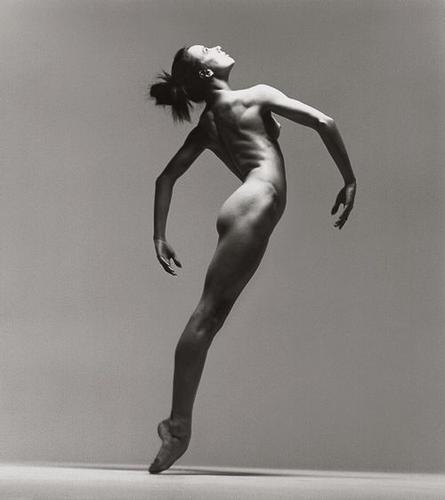
Her latest partner is the respected dancer and choreographer Russell Maliphant. More studied dance aficionados than I hold him in high esteem, but I do not see what they see, and I can’t help but think that Guillem has not only advanced his career by miles, but also elevated his art from the pedestrian and forgettable to the stratospheric by allowing him to attach himself to her. Of course I feel the same way about the great Joan Baez lending her divine voice and phrasing to an entire album of songs written by that smug twerp she dated in the early sixties, so take my opinion with a grain of salt if you want. As far as modern choreographers go, Maliphant’s work is fine, although I’m not sure it will place him in the pantheon of greats like Bausch, Tharpe, Ailey, Bejart, Cunningham, or Boris Eiffman. Maliphant is not to the world of choreography what Guillem is to the world of dance. And as a dancer, well, he’s short and has a big head and short limbs, like an unusually graceful rugby player. Some admire the athletic recklessness of his style, and fair enough, although when I’ve seen him he has seemed self-contained to a fault, and I wished he really would give off a sense of that athletic recklessness which is often touted as a perfect contrast to Guillem’s smooth exactitude. But again, he’s not to the world of dance what she is to the world of dance. He’s a very accomplished and very capable British dancer and she is the French alien with the unthinkable legs and criminal feet, in her time the most highly paid ballerina in the world, the press’s “Mademoiselle Non,” the Monstre Sacré who dismissed Paris Opera Ballet and its director—Rudolph Nureyev—as too provincial for her ambitions. I find the contrast between them painful to watch, and I want to console him afterwards. Imagine how I felt when both Maliphant and Guillem left the stage to Mr. Lepage.

Basically, I just don’t see what she gets out of the collaboration. More troubling, I don’t see what her audiences gets out of it, either.

I’m including some footage of Guillem at work, hopefully to show that the merits of her dancing are not merely gymnastic. The extreme arch of her feet, her shocking extension, the sense that she can perform even rapid movements smoothly and gracefully (where lesser dancers seem to have to choose between rapidity and grace)—all serve an expressive purpose, an artistic one beyond merely showing off. When the lines of the body can create a visual illusion that they go on farther than they do (and this, I think ,is the sought after effect of the physical elements considered virtues in ballet, which Sylvie Guillem possesses in spades—the fluid arch of the back and the leg stretched to hyperextension rising to a crest in the arch of the foot), the effect is both thrilling and strangely moving. It’s not just a matter of gawking at someone who can literally kick herself in the face. Dance, like verse drama, is a heightened portrayal of ourselves. In verse drama, we speak better than we really do in order to convey truths that paltry realism can’t carry. Shakespeare tells the truth about us more clearly than our own stammering, clunky inarticulateness ever could. It’s not “realistic” in that we can’t just yammer on and come out with the St. Crispin’s Day speech. But it’s real, as anyone who’s read or heard the speech and felt his throat clench and eyes well up knows. In dance, we need to see the body be more than it is in real life—longer, more graceful, more taut, more expansive, more able to move beyond itself—to perceive what it has to say. Buried in our natural oafishness is the ability to speak through our bodies, to say I am afraid, I am proud, I am sad, I am happy, I am horny, I love you, I want to kill. Dance, at its best, reminds us of that, because when a dancer is conveying these experiences we experience them along with her. And what do we go to the theatre for if not to be moved?


Monday, January 17, 2011

Pina Bausch's Le Sacre du Printemps


I managed to get a ticket to the New Year’s Eve performance at Paris Opera’s Palais Garnier of a modern triple-bill, the piece of most interest to me being Le Sacre du Printemps. Over the phone (at 35 centimes a minute), I was told that the house was completely sold out, but I figured it was worth a try to visit the box office the night of the performance to check for cancellations. There I was told that there were no cancellations but that for 35 euros I could buy a ticket for a seat in which, if I sat, my view of the stage would be completely obscured but if I stood up, I could see perfectly, and since there was no one behind me, I could do that (equivalent seats at Covent Garden go for a quarter of the price but wotevs). I was shown to my seat as the lights went down, the fourth seat in a loge in the upper balcony with a three-quarters view of the stage. My chair had a tote bag in it, and when none of the three other patrons cramped together offered to move it, I picked it up to put it on the floor, at which point the woman in front turned around, grabbed and replaced the bag, then wagged her finger at me. In the darkness I pointed to my ticket and back to the chair, and she responded again with her finger. When I whispered, “This is my seat; I have a ticket for this seat—please move your bag!!” (I didn’t even bother trying to speak French at this point), the man next to her shout-whispered,

“Bee Kwaiaytte!! SHOEUT OEUP!!”

“This is MY SEAT; I HAVE A TICKET”

“SHOEUT OEUP RRAIT NAWW!!”

Apollo is a quieter work for Stravinsky, composed entirely for strings, and so I stomped off in my boots across the noisy wooden floors with the rest of the gallery shoeusheeng me over its gentle opening chords and let the heavy brass door clank shut behind me. After much cajoling, the usher agreed to help me defend my place, but only if I agreed to be verree, verree kwaiaytte. She then realized that she had shown me to the wrong seat (merde alors!) , and that my ticket was in fact for a seat at the far end of the horseshoe-shaped gallery, acutely angled to the stage. I couldn’t see sitting or standing, so I did what most of the people in the ‘gods’ did; I moved over to stand as close to the wall separating the side loges from the central loges as I could. Standing there I could see a little more than half the stage, which I figured was better than being kicked out of the Palais Garnier. I didn’t understand all the commotion over my making noise, however. The upper balconies were pretty noisy. People were talking, walking in and out, burping babies, necking, and openly videotaping the performance. I’ve never had a very strict attitude about audience decorum, except with regard to crinkling candy wrappers and open drunkenness, so I didn’t mind the Freihaus atmosphere of the place, although I did mind that it smelled like a toilet. My visit to the Grand Ballroom during intermission, however, confirmed that the stench pervaded even the high-ticket areas. I feel it’s worth noting that though the Paris Opera might follow dubious standards in bathroom hygiene, they do serve champagne, finger-sandwiches, and petits-fours at intermission, something I have yet to enjoy at Lincoln Center.

I want to talk about Pina Bausch’s Le Sacre du Printemps. I was not familiar with this version before that night. It’s a striking work, which gets certain themes across brilliantly—fear, desperation, the horrific injustices human beings inflict on one another in times of misery. But it doesn’t quite match the big, bad original in several, I think, major ways. This is the opening of Nijinsky's version, originally created for the Ballets Russes:


Nijinsky’s work first tells the story very clearly. At the first lonely, lovely, cadence from the bassoon, the lights rise on people huddled in clusters on the ground. Slowly they arise and stretch, as if out of hibernation. It is the onset of Spring, and the people begin to beat the earth and reach out to the sky, a prayer for abundance. Rival tribes skirmish. The village elder examines the sky for omens. In part 2, the lights rise on the village maidens already engaged in a synchronized, repetitive dance, as if they have been doing this all night. One maiden collapses three times. She is the weakest, the “Chosen One.” She is isolated and forced to perform a frantic, strenuous dance that ends in her death. She is hoisted towards the sky as an offering to the sun-god.


This is the great Beatriz Rodriguez as the Chosen One, in Joffrey Ballet's recreation of Nijinsky's original.


In Bausch’s version, I couldn’t figure out how or why the Chosen One is, well, chosen. I have embedded videos of this version below. The piece opens with a single woman, apparently in some pleasant, maybe vaguely erotic reverie on a red cloth laid out on a stage covered in dirt. Slowly other women emerge from the wings; some rush to a point and stop, others meander, or do slow-motion pliés in the dirt. One can’t really tell what any of them are up to. As the music swells and gets more complicated symphonically, the womens’ movements become more spastic and more stereotypically “modern dance” in effect—they flail their arms and kick at the air, jerk their heads and stare, and it is as yet unclear what their agitation signifies. Is this Spring’s reinvigoration of the earth and people? Is it civil unrest? Is it growing hysteria, heralded by the clarinet verging on overblow in video 1, 2:42? I can’t tell, but that’s not a problem for me—yet. As whatever is happening pans out, the woman who had been asleep on the red cloth wakes from her reverie, and shudders at the realization she is holding this red cloth, which, in a scene entirely in brown and nude, stands out as an obvious, ominous, symbol. The women seem repelled and frightened by the cloth dropped downstage left, and for the first time dance in unison (video 1, 3:45). Also for the first time, there is a sensible (to me, at least) tone to their movements: they beat themselves, hunch their backs, squat and lurch clumsily. It seems more like strenuous manual labor than dance. The dirt from the ground sticks to their skin as they sweat; their hair gets more and more disheveled. They begin to seem less like dancers in delicate flesh-colored gauze slips than like half-naked self-flagellating automatons. One dancer breaks away from the group and shakes, doubling over at the abdomen, suggesting enteric distress (video 1, 4:44). Are these people starving? However, the real menace arrives in the forms of the men, appearing at (5:05)—from the time they arrive onstage it is clear that in this society (if it is indeed a society in the literal sense that is being portrayed here) men have total mental and physical power over the women. They charge onstage and the women suddenly disperse and stare at the floor, looking guilty, and like they hope not to be noticed. The mens’ movements are sharp, athletic, expansive; women cower before them, and seem even more naked in their sheer dresses. The women start to play “hot potato” with the red cloth, which almost makes sense if the red cloth represents the death sentence one expects it to based on both familiarity with the traditional story and on the horror with which it has heretofore been regarded in this version—but at one point a woman grabs the cloth out of the dirt and dances with it. Wait a minute--if the cloth is, say, ‘death,’—like “The Lottery”’s cross-marked ticket, and the women all understandably recoil from it, as they have from its revelation, why does she do that. The men grow more abusive, dragging women across the stage and crowding like wolf packs around the isolated ones. This dynamic persists throughout the rest of the piece, until the choosing of the sacrificial victim, in which each woman, trembling and clutching the red cloth to her breast, approaches what might be some sort of priest or elder (video 3, 4:15), as if to ask whether she is the one who must enact the terrible ritual. Finally the priest ‘chooses’ one (video 3, 5:24), and dresses her in the red cloth, which is in fact a loose-fitting slip. Perhaps it makes sense that a modern female choreographer chose to insert and emphasize an element of male-on-female control and abuse into a story that had heretofore been about something different, but I think it detracts from the main theme of this piece, and the one that this piece can express so well: the power of the group over the individual. You can diffuse that theme with stuff about subjugation of one whole gender by the other, but why would you?


Nijinksy’s original portrays the terrifying Darwinian imperative we arose from: the weakest of the lot is destroyed without mercy or sentimentality. Bausch’s piece hints at various forms of wretchedness (starvation, fear, oppression, displacement--at one point (video 2, opening), all the dancers plod in a circle suggesting a sort of Trail of Tears-style mass exodus—but who can tell what’s going on, really?).


In Nijinksy’s work, on the other hand, the people don’t seem too troubled by anything. Their faces are placid, their movements exact, they are elaborately dressed and made-up and seem healthy, if emotionless. We get the impression that ritual human sacrifice is just these people’s idea of how to keep on keepin’ on. You could easily mistake this society for a fairly civilized one until you realize what they’re on about. It reminds me of the contradictions of ancient Rome—they were so advanced in so many ways, yet eviscerations were their Jersey Shore. There is no hint of any soul-searching, or indeed, of the concept of “soul.” The only fear we see is in the shaking knees of the “Chosen One” after she is chosen: she is the only one who conveys anything we would recognize as human emotion, and she only does that after she has been isolated from the group, the implication being that what we know as “feeling” is a luxury one can only enjoy, or suffer, if isolation from “the group” (or “mob” or “society” or what have you) is not in itself a death sentence. For all this people’s apparent sophistication—they wear clothes, they farm, they organize rituals and pray—they still live like animals of prey. Only the weak separate from the herd and so must die.


My point is that it is less terrifying to see the horrific things human beings do to one another in times of misery than it is too see them doing the same things as mundanities. But I suppose anterior to that, my dissatisfaction with the piece stems from resentment at not being able to tell what is happening on a superficial level, not being able to follow the story or deduce whether there even is a story. If a piece is entirely abstract, then one can give oneself over to be moved by whatever emotions or ideas those abstractions elicit. But if there is a storyline, or even a suggestion of a story, it should be made clear enough to allow us to focus, both intellectually and emotionally, on the themes, on the heightened vision of ourselves that dance can show us, the stuff that’s both higher and more profound than plot. One can’t give oneself over to be moved by portrayals of human experience while simultaneously trying to sort out what that experience is.

I’ve linked to high-quality videos of Tanztheater Wuppertal’s 1978 recording of the piece. Of course the dancers I saw at Paris Opera were slimmer and longer-limbed, but the choreography speaks for itself, and Bausch does choreograph for a diversity of both body type and technique.